Note: This article was originally published on the Memgraph blog.
In the landscape of data management solutions, key-value databases stand apart, offering a unique blend of simplicity and performance tailored to the big data era. Before delving into the complexities of key-value databases, let’s first establish a foundational understanding of these databases.
Understanding a Key-Value Store
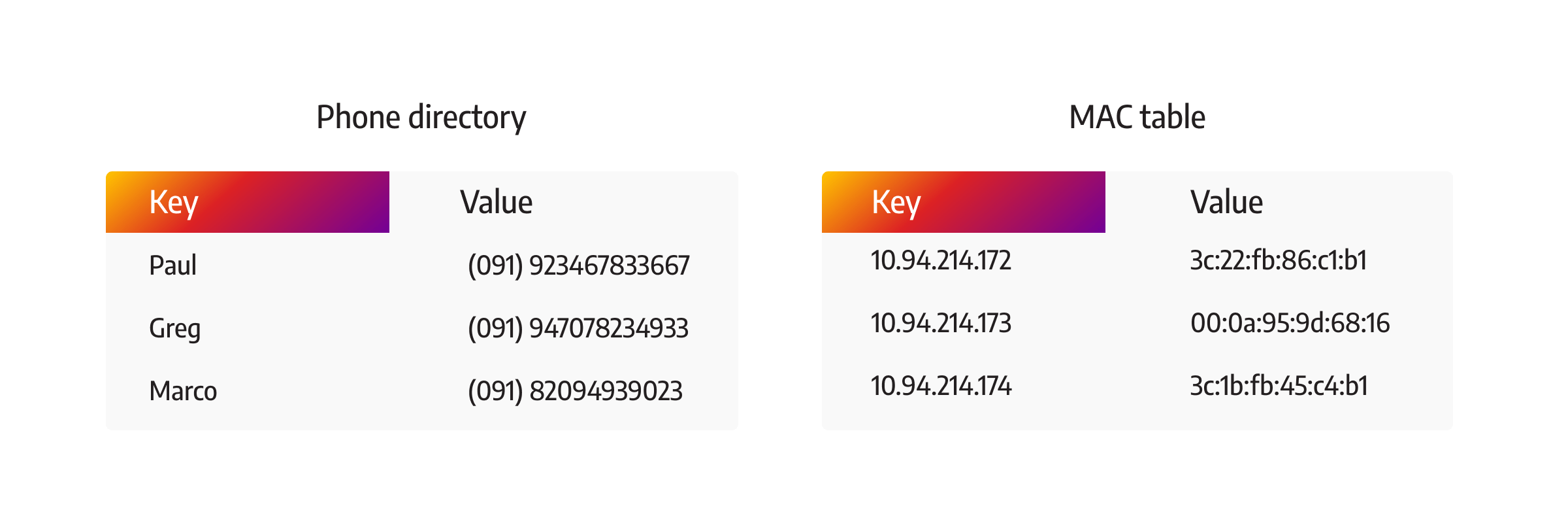
Key-value databases are designed for storing, retrieving, and managing associative arrays, a data structure commonly known as a dictionary or hash table. These records are stored and retrieved using a unique key. Key-value databases are the simplest form of NoSQL databases. Each item in the database is stored as an attribute name, or key, together with its value.
Defining Key-Value Stores
A key-value database uses a simple key-value method to store data. Each key-value pair represents a specific piece of data. The ‘key’ serves as a unique identifier that is used to find the data within the database.
Benefits and Advantages

Speed
Key-value databases can handle large volumes of reads and writes with minimal latency. The simplicity of the data structures makes it easy for developers to quickly store and retrieve data.
Horizontal Scaling
Key-value stores can easily scale horizontally by adding more servers to the existing network to distribute the data and workload. This makes them a preferred choice for applications that require elasticity and flexibility.
Ease of Use and Development
Developers can easily interact with the database using basic operations like “get” and “put” based on the associated keys. Popular examples include Redis, DynamoDB, Riak, and RocksDB.
Flexible Data Models
Key-value databases are schema-less, meaning they do not enforce a fixed data structure or data types. This flexibility allows developers to store various types of data within the same database.
Potential Drawbacks
Complex Queries
Key-value databases lack the ability to perform complex queries or handle sophisticated relationships between data. If your use case involves complex queries, a relational database or a graph database might be a better fit.
Lack of Data Relationships
Key-value databases do not inherently support relationships between data items. For applications heavily reliant on data relationships, such as social networks or recommendation systems, graph databases may provide more natural solutions.
Takeaways

Key-value databases offer a compelling mix of simplicity, speed, and scalability. They are a fantastic choice for use cases that involve handling large volumes of frequently accessed data or where horizontal scalability is required. However, it’s crucial to understand the capabilities and limitations before choosing them as a solution.