Note: This article was originally published on the Memgraph blog.
The open-source world is flooded with a large number of licenses, each with its own set of conditions and permissions. One such influential license, the Apache License 2.0, stands out in its balanced blend of freedom and protective clauses.
Origin and Evolution
The journey of the Apache License traces back to the early endeavors of the Apache Software Foundation (ASF), established in 1999. The evolution of the Apache License mirrors the growth and transformation of open-source development practices.
Core Features of the Apache License
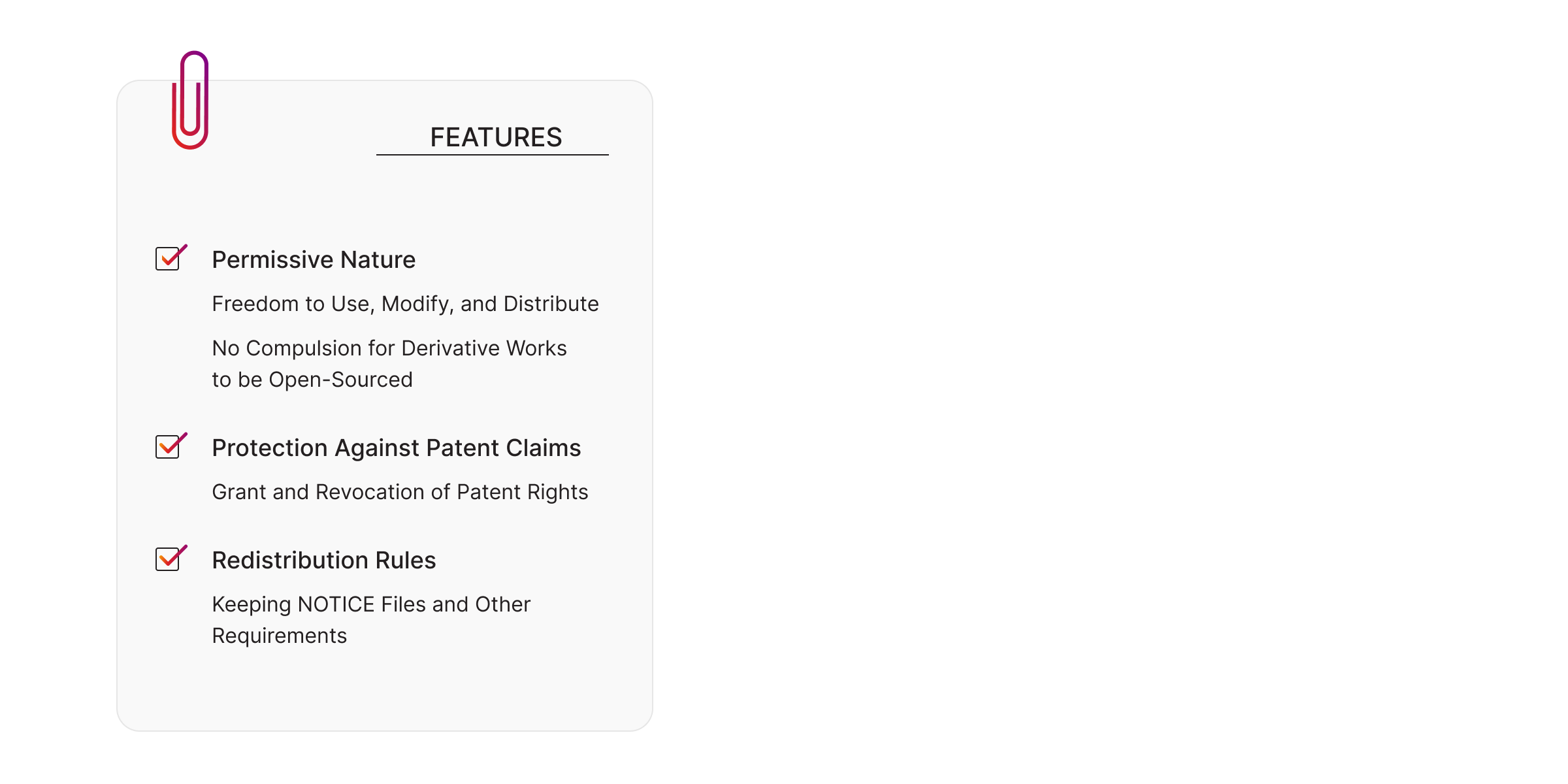
Permissive Nature
The Apache License 2.0 allows developers complete freedom to use the software in any way they deem fit. Derivative works do not need to be open-sourced, providing developers with the autonomy to choose the licensing model that aligns best with their project goals and business strategy.
Protection Against Patent Claims
When a contributor offers code to an Apache-licensed project, they grant a patent license. This means they cannot later bring forth patent claims against users or other contributors based on the contributed work. If a contributor does engage in patent litigation, their rights under the Apache License 2.0 are terminated.
Redistribution Rules
If the software you are redistributing contains a NOTICE file, that file’s content needs to be made available in your distribution. Redistributors must also include a copy of the license itself.
Comparison with Other Popular Licenses
MIT License
Both allow modification, distribution, and sublicensing. However, the Apache License’s explicit grant and termination of patent rights provide an additional layer of protection that the MIT License lacks.
GNU GPL
The GNU General Public License (GPL) embodies “copyleft”: any derivative work must also be released under GPL. The Apache License 2.0 offers more flexibility, allowing developers to choose the license for their modifications.
BSD License
Certain variants of the BSD License include advertising clauses, which mandate that the original developer’s name be showcased in derivative works. The Apache License steers clear of such clauses.
Takeaway
The Apache License 2.0 embodies balance when it comes to open source licensing. It combines flexibility with protection, attributes that resonate deeply with developers and tech founders. Whether you’re embarking on a new project or integrating open-source components into your work, the Apache License 2.0 provides a foundation that you can trust and build upon.